Cabernet, Merlot and Syrah at altitude
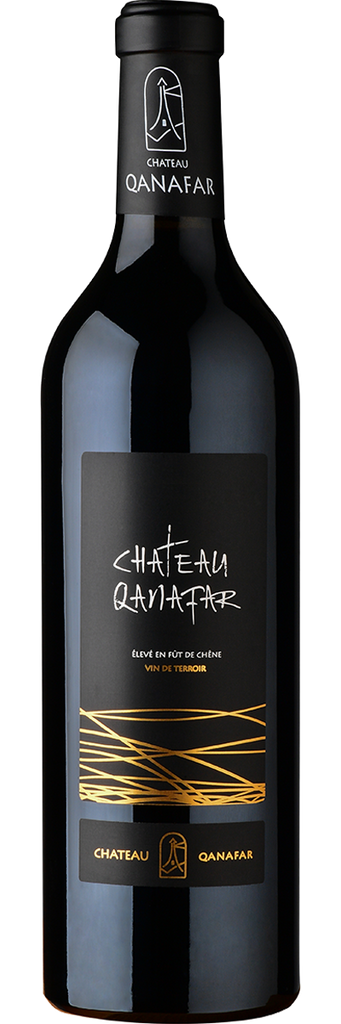
Château Qanafar is the family estate’s premium red blend from the western Bekaa. Ripe black fruit provides the main aroma, while the palate adds a quietly velvety texture. Acidity balances the depth and length. These features help identify the style across the documented bottlings. However, the estate explicitly allows the grape blend to change from harvest to harvest.
Tasting notes
Aromas
 Black fruit
 Blackcurrant
 Dark fruit
 Ripe fruit
Style & mouthfeel
 Complex
 Elegant
 Velvety
 Balanced
 Full-bodied
 Structured
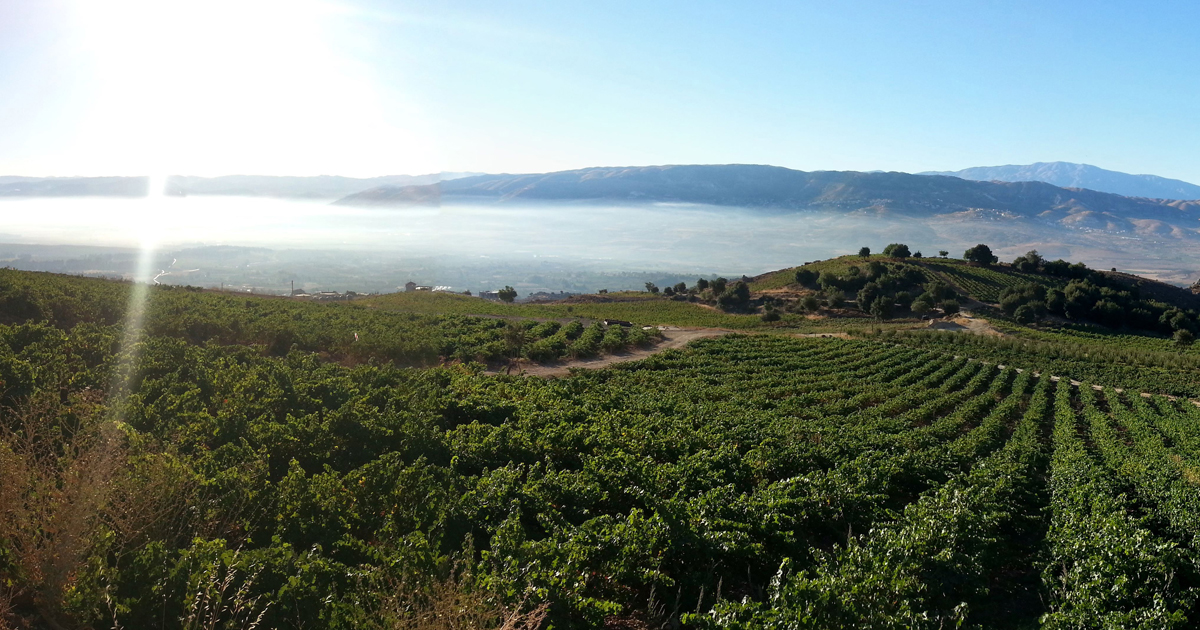
Hills above Khirbet Qanafar
The family’s vineyards lie above Khirbet Qanafar at about 1,200 metres. The origin notes also describe limestone. The estate manages its own vineyards and places selection in the vineyard among its priorities. Its account describes using its own grapes. Short distances between vineyard and winery help support that approach after harvest. Together, these details give the red blend an origin more specific than the Bekaa Valley alone.
A blend that changes with the harvest
Cabernet Sauvignon, Merlot and Syrah are the varieties named in the general profile. The 2016 reference includes all three. The producer’s 2015 specification, by contrast, has no Merlot. Thus, Château Qanafar does not use an unchanging recipe. Both reference sheets record hand harvesting, with the reported dates between early September and early October. Those dates apply to the individual harvests rather than forming a fixed schedule.
Stainless steel, then twelve months in French oak
The documented 2016 ferments in temperature-controlled stainless steel at 24–26 °C. The wine then matures for twelve months in French oak. The cellar normally uses barrels of 225 litres. For that example, around one third were new, one third on the second fill and one third on the third fill. The estate describes bottling without fining or filtration. These distinguishable steps give useful context for the texture in the glass.
Ripe dark fruit with balanced acidity
Château Qanafar starts with black fruit and cassis. Then compare its body with the sensation left by the oak tannins. The body is full, yet the tannins feel velvety. Meanwhile, the acidity gives the wine a line to follow from the first sip into the finish. The source describes the wine as complex and elegant, and mentions ageing potential. Actual development depends on the bottling and cellar conditions.
Beef, lamb, pork or strong cheese
Château Qanafar can accompany beef, lamb or pork depending on the dish. A mild preparation keeps attention on the blackcurrant, while a fuller sauce gives the tannins a stronger counterpart. Try a small sip after the first bite to see which part becomes more apparent. Strong cheese is another listed partner. The fruit stays recognisable beside it, but the texture can feel different as the cheese changes the balance in the mouth.
 Red meat
 Beef
 Pork
 Lamb
 Strong cheeses
 Cheese