Acidity
The bright or tart sensation that often makes you salivate. It contributes to the impression of freshness.
Home / Magazine
Find a story to follow, a grape to look up or a way to describe what you taste. Explore the places, people and meals that give Lebanese wine its context.
Explore the storiesA wine press from the Iron Age at Tell el-Burak, south of Sidon, shows how grapes were pressed and the juice collected. Knowledge of viticulture also travelled around the Mediterranean. Rome commissioned a translation of Mago of Carthage’s work on farming, a separate example of how agricultural knowledge survived and moved between cultures.
The Lebanese wine timeline follows later episodes too, from Roman Baalbek and monastery traditions to the founding of commercial estates.
Merwah and Obeideh are traditional white grapes with ties to the country’s drink culture, including arak. Both appear in wine. Alternate spellings can make them harder to spot on unfamiliar labels. Merweh and Obaideh are two examples.
Names such as Cinsault and Carignan provide another starting point. Explore the grape filters in the wine collection, then compare the profiles to see how a variety is used in different blends.
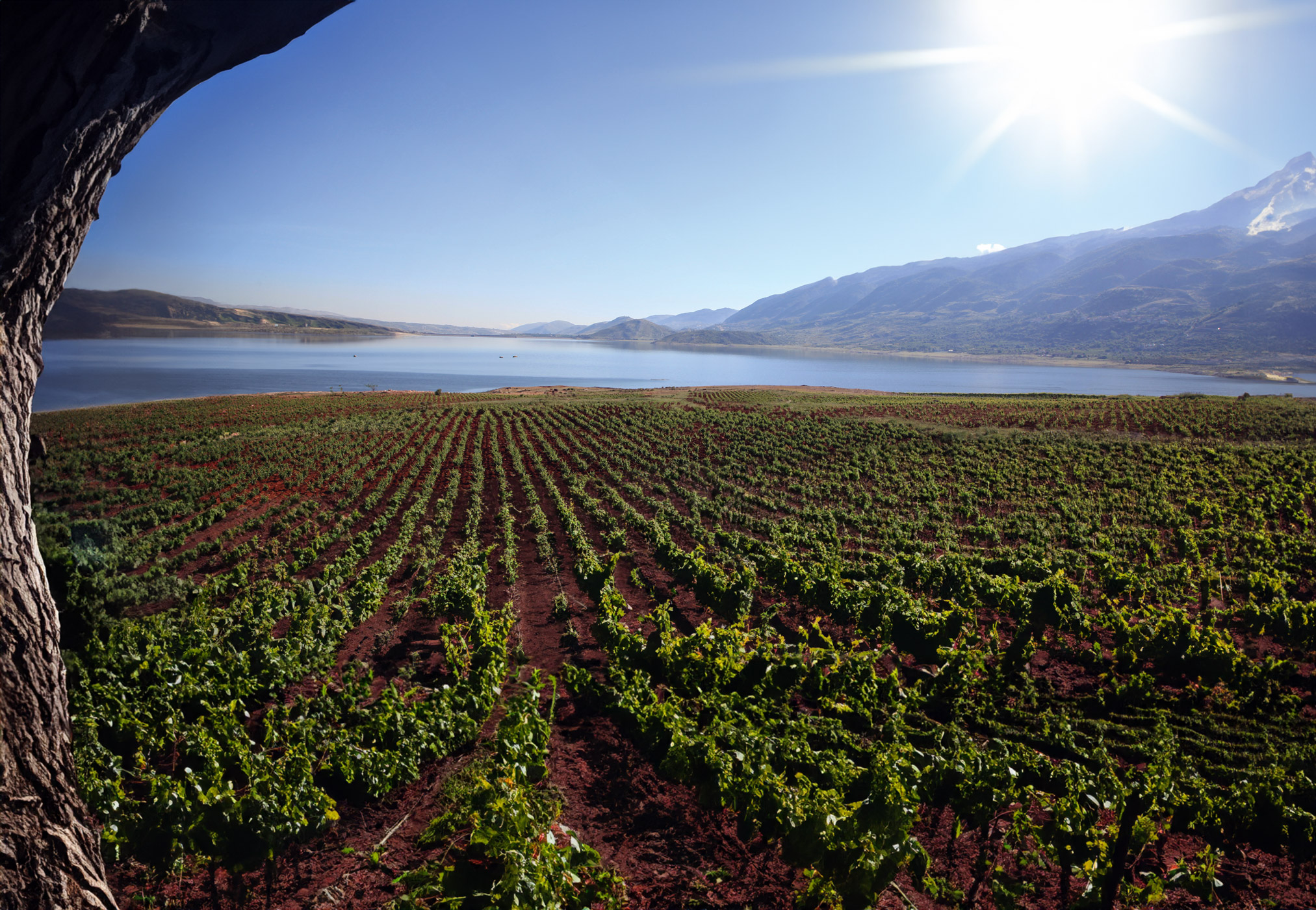
A label may name a producer without telling you much about the vineyard. A profile can place it in a coastal area such as Batroun, on the slopes of Mount Lebanon or on the high plain of the Bekaa Valley.
A winery can draw on more than one landscape. When reading about an estate, distinguish where the cellar sits from where the fruit grows. The two do not always share the same elevation or conditions.
Mezze puts many textures and flavours on the table at once. Hummus, grilled vegetables and kibbeh ask different things of the same glass. Try a sip with one dish, then a second with something richer or sharper. Compare what happens to the fruit, freshness and feel of the wine.
The Wine Finder groups recommendations by dish. Use it to choose a starting point and open the wine profile for more context.
Long-established wineries sit alongside smaller projects and newer family ventures. Some growers return to inherited plots, while others build relationships with vineyards in several regions. Estate profiles give these choices context. Use them to see the people and sites behind a wine you have tasted.
Start with broad groups such as citrus, flowers, stone fruit, herbs or spice. Once you recognise a group, name the closest familiar example. Lemon zest is a more useful description than “fruity” when comparing two wines already described as fresh.
A descriptor is an impression. A note of peach in a wine does not mean peach was added. Grape variety, ripeness, fermentation and ageing can all contribute to what you smell.
An aroma tells you what the wine smells like. Structure describes how it feels. Ask whether it is light or full, brisk or soft, and whether a drying feeling persists after you swallow. These observations help distinguish style from the flavours you noticed first.
The bright or tart sensation that often makes you salivate. It contributes to the impression of freshness.
The drying or grippy feeling you might recognise from strong tea. Think about the amount and the texture rather than the flavour.
The sense of weight and fullness in the mouth. Compare two wines side by side to make it easier to describe.
The sensations and flavours that carry on after the sip. Note what stays and about how long it lasts.
Use this quick guide when a bottle name or profile includes a term you are unfamiliar with. The wine profile is the best place to confirm what the term means for that producer’s wine.
A term for a named wine or a particular selection. Check the wine’s profile to see whether it contains one grape variety or several.
The harvest year of the grapes. Growing conditions can differ from one year to the next, even within the same vineyard.
The wine culture page lists sources for its historical timeline and evidence about Tell el-Burak. For individual wines, the profiles distinguish the grapes, region and producer and record the evidence available for each wine.
For the wine trade
We arrange deliveries to restaurants, specialist wine shops, wholesalers and importers across Europe, including Spain. Tell us which wines you’re interested in, how much you need and where you’d like them delivered. Our team will check availability and discuss delivery options with you.
Discuss supply with Caracter Wines