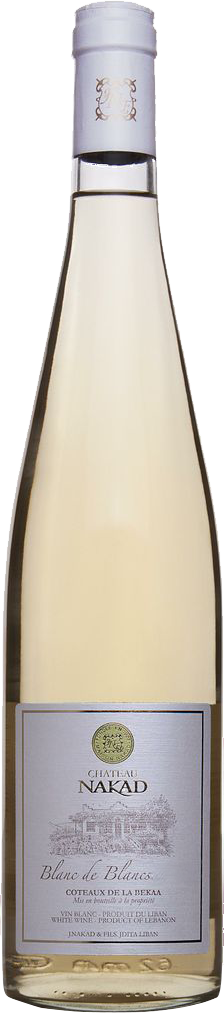
Blanc de Blancs from Château Nakad
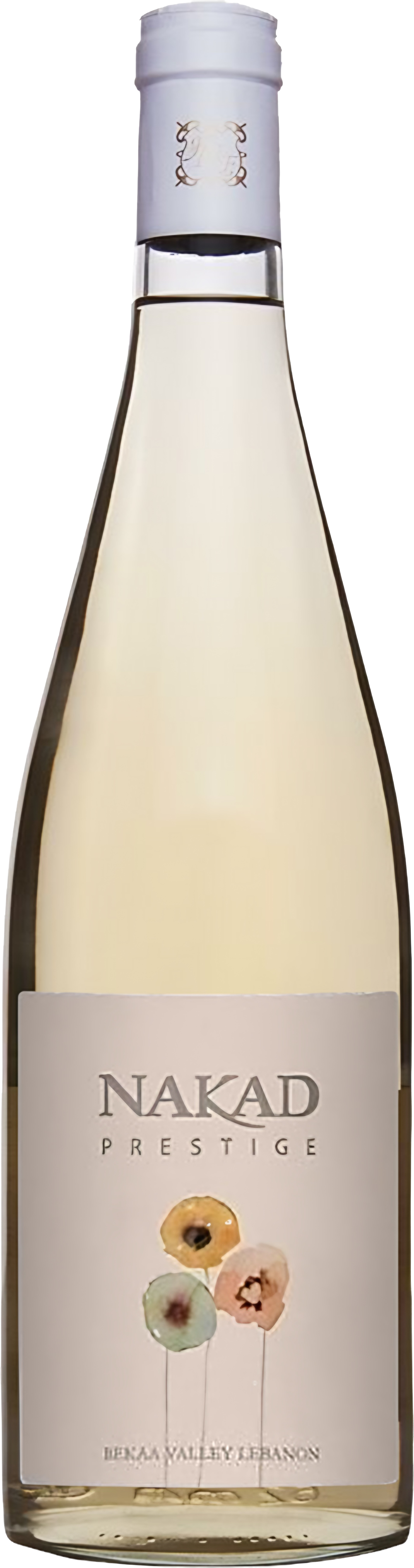
Blanc de Blancs introduces Château Nakad's white range through a combination of exotic fruit and white flowers. Clairette, Sauvignon Blanc and Viognier make up the blend. For a first taste, the contrast between the two groups of aromas is more telling than trying to draw a line from each scent to one grape. The suggested dishes offer an easy way to taste that balance at the table.
Tasting notes
Aromas
 Exotic fruit
 White flowers
Style & mouthfeel
 Refined
 Complex
 Fruity
 Floral
 Exotic fruit
Old vines on the hills of the Bekaa
Château Nakad places the vineyards for this white on the hills of the Bekaa in Lebanon. The documented height is 900 metres. The producer highlights old vines when describing the source of the fruit. That gives the blend a connection to the site as well as to its three varieties. You could taste it beside a rosé or red from the same estate to see how it distinguishes itself within the range.
Clairette, Sauvignon Blanc and Viognier
The three white varieties come together in Blanc de Blancs. They create a profile in which fruity scents and white flowers share the foreground. Taste the wine as a blend before considering how familiar the individual grape names sound. The estate's tasting notes describe the bouquet as a whole. That makes the relation between flowers and exotic fruit a useful starting point. Leave the question of which variety contributes each aroma open.
Describing a white blend through its aroma
The winery's account is more detailed about the fruit and flowers than about cellar technique. For tasting, begin by finding the more obvious scent and then take another look at what follows. The exotic fruit may be easy to describe at first. White flowers then give a finer impression. Compare it with the fruit as the aromas develop in the glass. After smelling, take a small sip and see how much of that first balance carries through to the palate.
The balance of exotic fruit and white blossom
Château Nakad describes Blanc de Blancs as refined and complex. You can explore that description by noticing how the exotic fruit and white blossom fit together. One gives a brighter impression. The other adds a delicate edge. Taste it again with the second aroma in mind. A different note may seem more prominent on the next pass, and both remain good reference points when you serve it with food.
Poultry, seafood and spice
The estate recommends fish, seafood and poultry. It also mentions well-seasoned dishes. That gives you room to compare simple and more assertive preparations. At the table, begin with a gently seasoned fish course. Then try the wine with a more aromatic dish and see whether the white flowers or exotic fruit hold their place. Poultry offers a different texture. It is a useful option if you want to move on to a main course.
 Poultry
 Well-seasoned dishes
 Fish
 Seafood