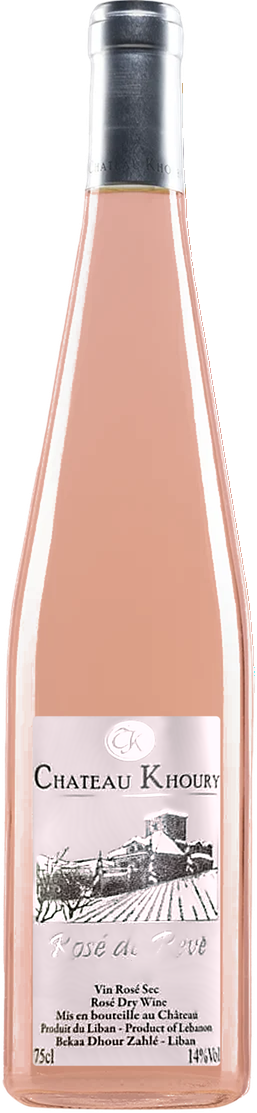
Rosé de Rêve from Château Khoury
The colour of Rosé de Rêve is pale, but the rosé has a fuller feeling than the first look suggests. Its fresh start is carried by redcurrant and raspberry, with blackcurrant adding a darker fruit note. Later, the palate becomes more rounded and almost velvety. This is one of Château Khoury's entry wines, and its easy opening is a useful way into the estate's saignée style.
Tasting notes
Aromas
 Red fruit
 Redcurrant
 Blackcurrant
 Raspberry
 Fresh fruit
Style & mouthfeel
 Dry
 Fresh
 Fruity
 Light
 Soft
 Velvety
 Fleshy
 Supple
 Summery
 Approachable
 Expressive
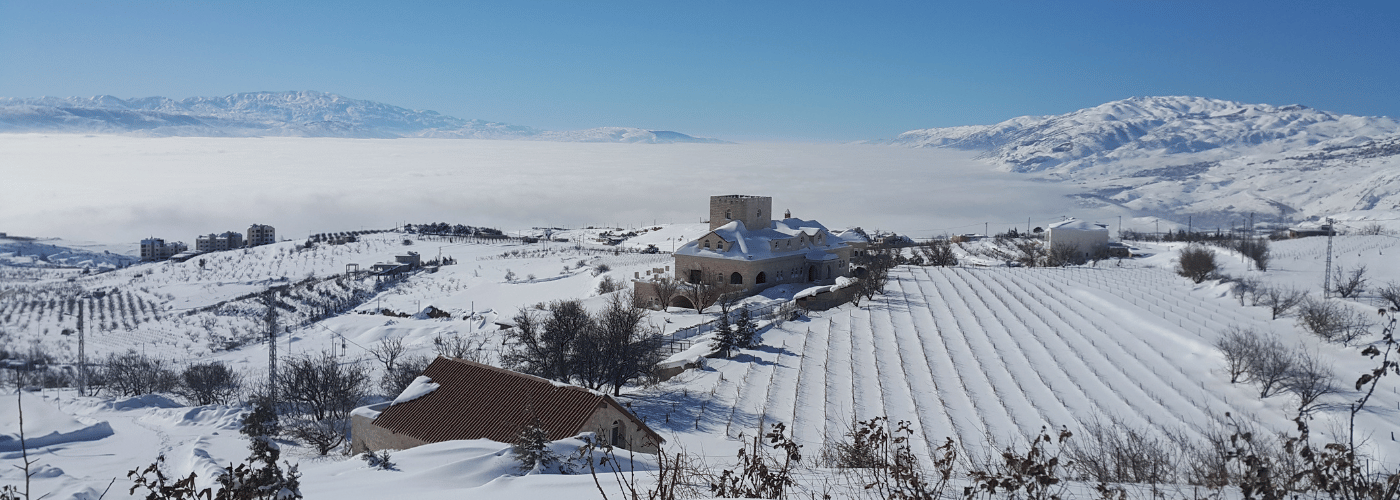
High vineyards at Dhour Zahlé
The source places the plots in the Bekaa Valley at Dhour Zahlé. They sit at 1,200 metres, face south and southeast, and have clay and limestone soils. These details offer a specific origin for the red grapes behind the pale wine. They also put the rosé in context alongside the estate's reds. The difference between the wines is therefore worth looking for in their production and texture, since both begin with fruit grown for the red side of the range.
Preparing the red grapes
Château Khoury harvests the fruit at its desired phenolic ripeness. Afterwards, the team removes the stems, crushes the berries and fills the fermentation tanks. Rosé de Rêve starts with juice from that material. It is useful to keep this in mind because the finished rosé sits well apart from the reds when you taste it. During preparation, however, the same grapes supply the starting point. The subsequent handling of the juice accounts for the very different wine in the glass.
How the estate makes its saignée rosé
The team draws off juice during tank filling. In this case the estate describes a quick release of colour. The juice then clarifies for twenty-four hours at low temperature before fermentation. The documented fermentation lasts three weeks, and the wine undergoes partial malolactic fermentation. Together these steps explain how the pale juice continues separately after leaving the red grapes. The estate describes a dry, light and accessible rosé, while its tasting account also gives texture an important role.
Berry aromas and a velvety middle
Rosé de Rêve pours clear and light pink. First look for the open berry aromas rather than the colour's delicacy. The currants give two separate impressions, while raspberry adds another layer. The producer describes the attack as both supple and fresh. Then the palate feels fleshier and more mouth-coating, with a smooth, velvety sensation. Compare those two stages in one sip and the wine's texture becomes easier to separate from its bright fruit.
A berry-led aperitif
Château Khoury suggests serving the rosé as an aperitif and describes it as a summer wine. A glass on its own lets you get to know the fresh attack and softer middle. If you want a small bite alongside it, the German editorial profile suggests light, gently seasoned nibbles. Taste the wine first, then compare it with food. The contrast is especially useful here because the berry aromas and the round texture need not be equally prominent with every bite.
 Aperitif
 Starters