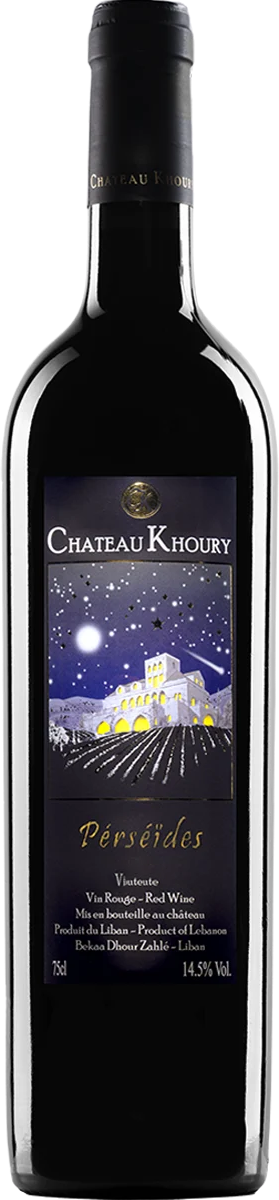
Perséides from Château Khoury
The estate associates the name Perséides with watching the Perseid meteors in August. In the glass, the wine also takes time to reveal itself. Its colour is deep garnet and the nose starts quietly, with woodland notes. The more open first sip makes that restraint striking. Then a specific peppery note gives the finish its direction and carries the flavour beyond the fruit.
Tasting notes
Aromas
 Undergrowth
 Sichuan pepper
Style & mouthfeel
 Spicy
 Peppery
 Persistent finish
South-facing plots in Dhour Zahlé
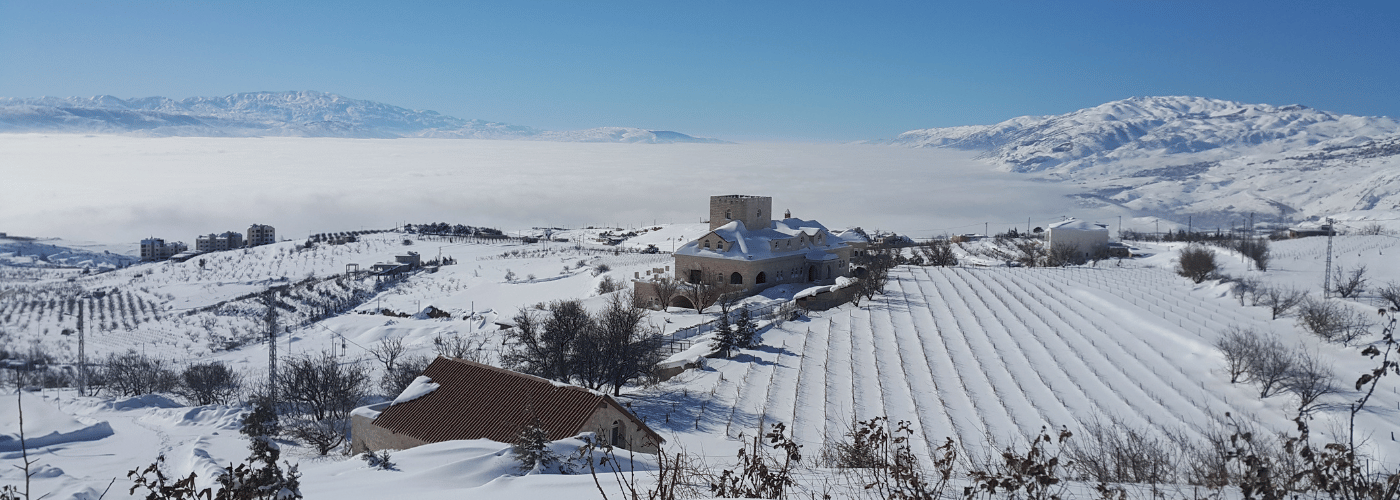
The documented vineyards are in Dhour Zahlé in the Bekaa Valley. They are south-facing and lie at 1,200 metres. The account names clay and limestone as the soils. These concrete details anchor the blend in a particular place, while the name recalls a night at the château. The estate links that name to the August meteor shower. Together those two sides explain why the bottle can be read both as a site wine and as a family story.
Hand selection for the three-grape blend
Château Khoury describes carefully selected fruit for this reference. The blend includes Syrah, Cabernet Sauvignon and Merlot. The team picks the bunches by hand and carries them in small crates. It then destems and crushes the fruit before the cellar stages. Keeping the three varieties in view is useful because a separately recorded 2012 uses Cabernet Franc in the place of Merlot. Each composition describes an identified bottling, so the two accounts offer context without creating a single recipe.
Cold soak, fermentation and French oak
Perséides has about a week of cold maceration in the producer's reference. Alcoholic fermentation then takes roughly four weeks with native yeasts in temperature-controlled stainless steel. Malolactic fermentation also takes place. Afterwards the wine spends eighteen months in new and young French oak barrels. Steel and oak therefore belong to separate steps. The first describes the tank used for fermentation, while the second records maturation. The combination of new and young barrels is specific to this account.
How Perséides develops in the glass
The nose begins with undergrowth, whereas the attack feels more generous. Sichuan pepper is the distinctive spice on the palate, and the taste persists after swallowing. A separate 2012 description starts differently. It records strawberry and raspberry, along with light wood notes, thyme and coriander. Meanwhile its palate comes across as denser and more tannic. It still carries a peppery finish. That difference gives a concrete example of variation between dated references to the same cuvée.
Rich meats and raw-milk cheese
The producer recommends beef, lamb and game as well as raw-milk cheese. The peppery finish of Perséides gives a useful clue for choosing a match. For example, compare the wine beside simply roasted meat before trying it with a strongly seasoned sauce. At a cheese course, see whether the wine's savoury edge lingers differently than it did with the meat. Tasting these combinations side by side makes the opening and finish easier to recognise.
 Beef
 Lamb
 Game dishes
 Cheese
 Red meat
 Raw-milk cheese