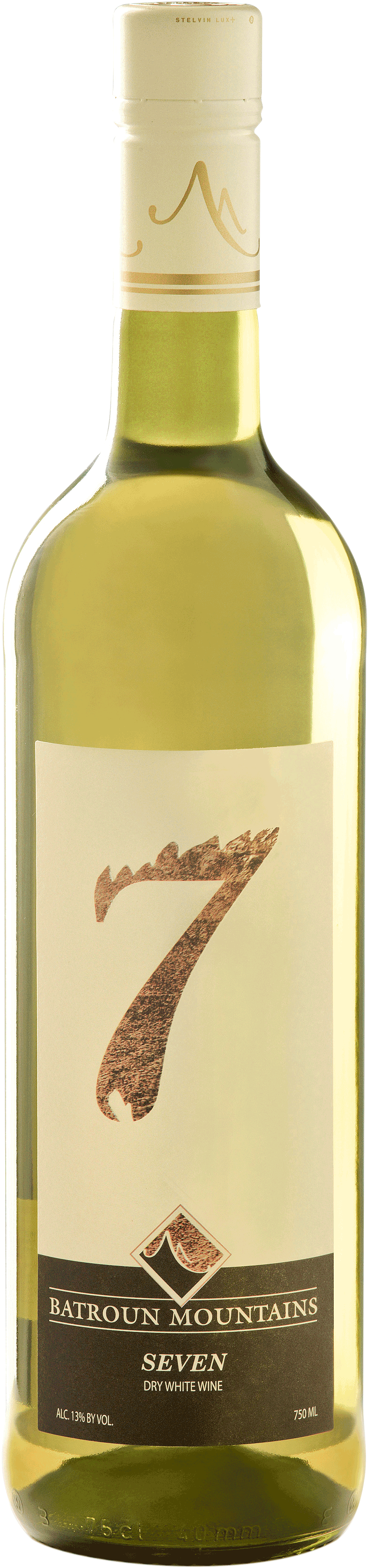
Seven from Batroun Mountains
Seven takes its name from the number of grape varieties in the blend. It opens on guava and mango, but there is also a cooler edge of gooseberry and citrus. Peach rounds out the fruit, while acacia gives the aroma a floral lift. The taste is dry and balanced. Its crisp acidity helps the different flavours sit together in a white with plenty of perfume.
Tasting notes
Aromas
 Guava
 Mango
 Peach
 Gooseberry
 Lychee
 Citrus fruit
 Acacia
 Herbs
 Blossom
 Stone fruit
Style & mouthfeel
 Dry
 Fresh
 Crisp
 Fruity
 Balanced
 Elegant
 Versatile
 Tropical
 Floral
Two mountain elevations in Batroun
Batroun Mountains names Adoula and Kfour El Arabe as the origins of the grapes. The producer’s account gives two elevations, 900 and 1,500 metres. Both measurements belong to the blend as a whole. The label and the site information answer different questions. The label identifies the wine as dry, while the vineyard information places the fruit in Batroun. The freshness and aromatic range describe how that fruit tastes in the finished wine.
Four familiar grapes and three Lebanese varieties
The blend brings together Chardonnay, Riesling, Sauvignon Blanc and Muscat. It also includes Merwah, Obeidi and Youssfi, giving the selection a local dimension. The producer spells Merwah as Merweh in its description. Each name belongs to the same seven-grape list. The winery gives no proportions, so the citrus, floral and tropical notes are best understood as features of the blend. The story here is the combination of varieties from the two sites.
Aromatic balance in a dry white
The original label describes Seven as a dry white. That detail makes sense of the contrast between sweet-smelling fruit and a palate led by acidity. The winery describes the blend as fresh, aromatic and balanced. Guava and mango make a generous first impression, while gooseberry and citrus give the taste a sharper outline. The producer’s account centres on that balance. The resulting style is easy to follow even when several different aromas appear in succession.
Tropical fruit, citrus and a herbal close
Smell the wine first for the tropical notes. Alongside guava and mango, the tasting description includes lychee. Peach brings a softer stone-fruit note, while gooseberry adds another register. Then look for acacia and the herbal accent as the wine sits in the glass. On the palate, crisp acidity gives those flavours a common thread. The combination of fruit and freshness is also what makes the dry finish feel proportionate to the bouquet.
Around a table with fish, mezze or roast chicken
Try Seven with grilled sea bass or seafood pasta. The citrus and gooseberry suggest a starting point next to fish, while the peach and tropical notes can still come through with pasta. The producer also suggests mezze and creamy burrata. With burrata, the acidity offers a lively contrast to the soft texture. At a larger table, roast chicken gives the white another role. Its range of flavour suits a meal that moves from small dishes to a main course.
 Grilled dishes
 Seafood pasta
 Mezze
 Burrata
 Roast chicken
 Fish
 Seafood
 Pasta
 Cheese
 Poultry