Syrah and three Bordeaux varieties from Jezzine
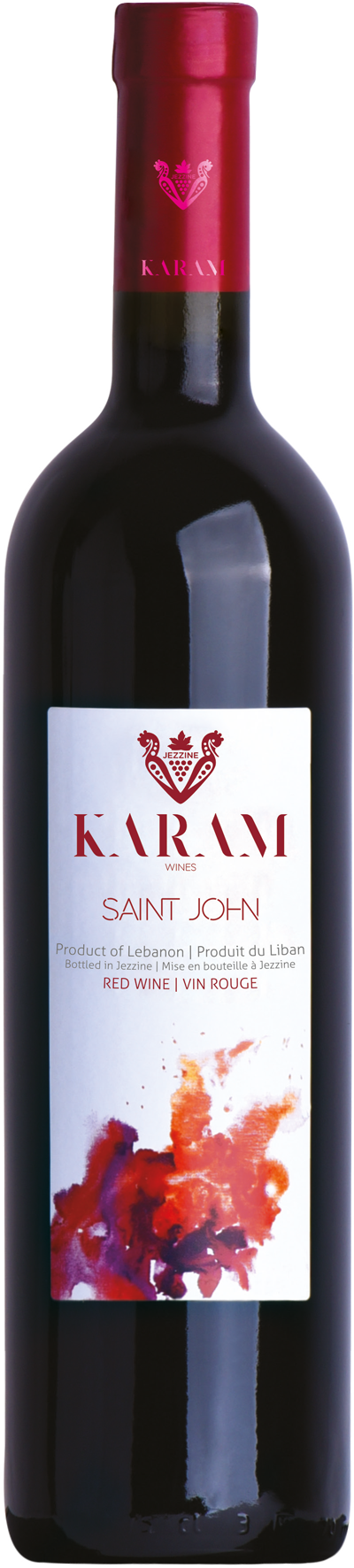
Saint-John takes its name from John, the youngest of Habib Karam’s three children. The wine itself draws on four varieties and several sites in the mountains around Jezzine. Blackberry and red berries are the clearest fruit impressions. Then hints of cedar come into view. The family name is a useful starting point, but the blend’s texture and length deserve just as much attention.
Tasting notes
Aromas
 Blackberry
 Red berries
 Red fruit
 Cedar
Style & mouthfeel
 Velvety
 Balanced
 Structured
 Persistent finish
 Complex
 Fruity
 Dry
 Berry-forward
 Well-structured
 Full-bodied
 Fresh
 Lively
Mountain vineyards in southern Lebanon
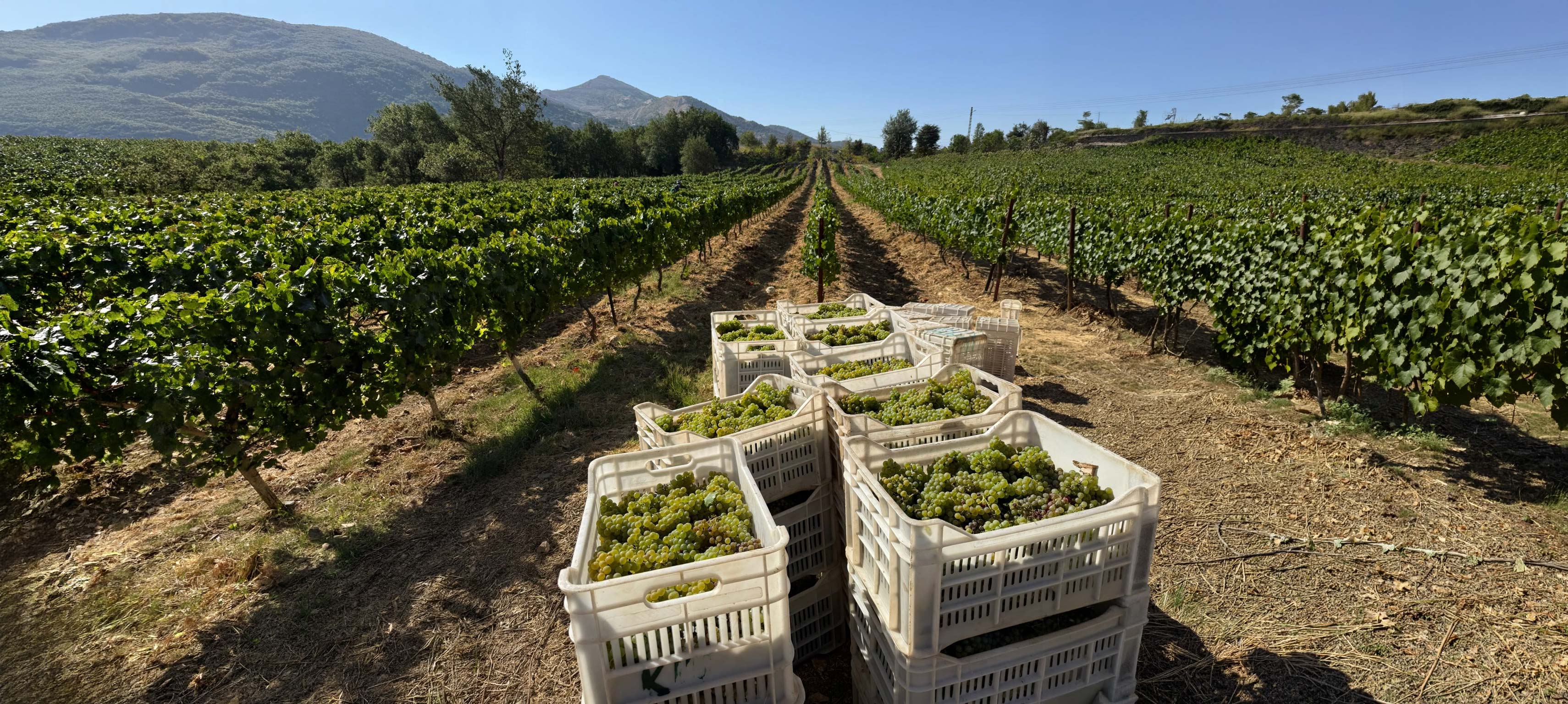
The grapes grow on the mountain slopes of Jezzine in southern Lebanon. Karam records about 1,300 metres for these vineyards. The fruit comes from different sites within the same landscape. Thus, there is a common regional identity despite the variety of origins. Compare Saint-John with Thouraya in the Karam range. Both belong to the house’s medium tier, but their grape compositions give two perspectives on Jezzine.
Four varieties in the blend
Syrah, Cabernet Sauvignon, Merlot and Cabernet Franc form the assemblage. Karam describes the choice of grapes as central to this particular bottling. However, it is not necessary to assign each aroma to one variety. Start instead with the fruit, then notice the texture that carries it. That approach also makes it easier to compare the blend with one of Karam’s single-variety wines.
The cellar’s two kinds of oak
Karam completes alcoholic fermentation in stainless steel. The next stage is twelve months in French and American oak, followed by bottling without filtration. The technical description for the 2012 reference explains the use of the barrels. New French oak accounted for 70 per cent. Previously filled American oak made up the remaining 30 per cent. Consequently, the source distinguishes both the origin and the prior use of the barrels.
A long, velvety expression
Saint-John feels dry and full on the palate. However, fresh red berries and a velvety texture give its structure a softer outline. Cedar becomes clearer towards the finish. Karam suggests a large glass, an hour in a decanter and a temperature of 17 °C. It describes the wine as suitable for drinking now or allowing more bottle maturity. For the 2012 only, Karam lists two gold medals. These came from the Concours Mondial de Bruxelles in 2017 and Sélections Mondiales des Vins in 2016.
Duck, lamb and a savoury sauce
Karam recommends duck or lamb served with a sauce, or hard cheese. A savoury sauce sits comfortably against the cedar, while the berry flavours add contrast. At a mezze table, try a small starter before moving to the main course. Alternatively, serve the wine with steak. A few minutes in the glass give you time to compare how the fruit and texture change alongside each bite.
 Duck
 Lamb
 Hard cheese
 Poultry
 Red meat
 Cheese
 Steak
 Mezze
 Starters